

Our Blogs
Quick answer: A proper electrical maintenance inspection in Dubai covers thermal imaging of panels, cleaning and tightening of connections, testing of protection devices, earthing checks, cable insulation testing, load and phase balance, and a written report. Most properties should plan at least one full inspection a year, ideally before the summer peak.
Most buildings only think about their electrical system when something stops working. A breaker trips, a floor loses power, or a panel starts to smell hot, and suddenly everyone is calling for help. By then, the problem has usually been building for months.
Regular electrical maintenance in Dubai is meant to catch those problems early. In this blog, we explain what a proper inspection includes, how often it should happen, and how to tell a thorough service from a quick walk-through.
Electrical systems here work hard. Air conditioning runs for most of the year, buildings stay occupied late, and many sites keep adding new loads such as extra equipment or EV chargers. High temperatures and fine dust put extra stress on panels, joints and cables, so small defects grow faster than they would in a milder climate.
The result is quiet wear that nobody notices until it turns into a trip, an outage or, in the worst case, a fire. Our guide on how to prevent electrical fires in your building shows how closely maintenance and safety are linked.
Think of it like servicing a car before a long summer drive. You do not wait for the engine to overheat on the highway. The same logic applies to a distribution panel that feeds an entire floor, because the cost of one failure is far higher than the cost of regular care.
Reactive maintenance means fixing things after they fail. It looks cheaper at first, but emergency call-outs, lost business hours and damaged equipment add up quickly. Preventive maintenance follows a planned schedule of inspections and tests, so defects are found while they are still small. Most property managers who switch to a preventive plan find that unplanned downtime drops, and repairs become easier to budget. We cover the wider benefits in our blog on how electromechanical maintenance prevents breakdowns.
A thorough visit goes well beyond a quick look at the panel door. Here are the main areas an experienced team should check.
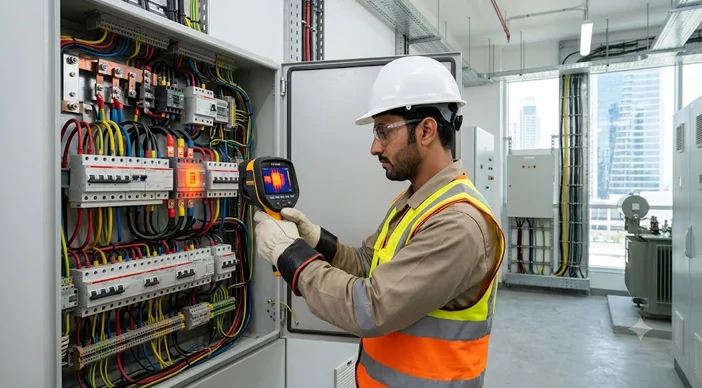
Loose or worn connections create resistance, and resistance creates heat. A thermal camera shows hot spots on breakers, busbars and terminals without switching anything off, so problems become visible long before they cause damage. This is one of the most useful checks in any inspection.
Dust inside panels traps heat and can lead to tracking, while vibration and temperature changes slowly loosen terminals. During a planned shutdown, the team cleans the equipment and tightens connections to the correct torque. It sounds simple, yet it prevents a large share of overheating faults. If heat is already a concern, read our advice on protecting your building against electrical overheating.
Circuit breakers and residual current devices are there to cut the supply when something goes wrong. A proper inspection tests that they actually trip as designed, because a protection device that fails to operate is worse than having none, since it gives a false sense of safety.
Good earthing protects people and equipment by giving fault current a safe path. The team measures earth resistance and inspects earth connections for corrosion or damage. Poor earthing is easy to miss and very risky, as we explain in our blog on what happens when electrical earthing is poorly installed.
Insulation resistance tests show whether cables are ageing or absorbing moisture before they fail. If a test result looks poor, the cable can be investigated further with our cable testing and diagnostic services. When a cable has already failed, cable fault locating finds the exact spot so the repair stays small.
Uneven loading across the three phases makes some conductors run hotter than others and wastes capacity. The team records current on each phase and recommends changes if one is overloaded. This check matters even more if you have recently added equipment or EV charger installation to the building.
A good inspection ends with a written report. It should list what was checked, what was found, what was fixed on the day and what needs follow-up, ideally with photos. Over time, these reports help you spot patterns and plan upgrades instead of reacting to surprises.
The biggest mistake is treating maintenance as a once-in-a-while formality. A single visit after a breakdown fixes that one problem, but it does nothing for the next weak point. Another common error is ignoring small warning signs, such as a breaker that trips only on hot afternoons. That pattern usually means a circuit is running close to its limit, and it will get worse as summer continues.
Many owners also skip the paperwork. Without test records and panel drawings, every new engineer has to start from zero, which wastes time and increases cost. Finally, avoid choosing a provider on price alone. A very cheap visit often means no thermal scan, no proper tests and no report, which leaves you with the same risks you started with.
There is no single answer, because it depends on the size of the building, the load and how critical the supply is. As a practical guide, many properties plan at least one full inspection every year, and it makes sense to do it before the summer peak. Sites with heavy loads or sensitive operations, such as warehouses with cold storage or server rooms, often benefit from checks every six months or even every quarter.
You should also book an extra inspection after any major change, such as new air conditioning, added machinery or a change in how the building is used.
Sometimes an inspection reveals a symptom rather than a cause, such as repeated tripping or voltage drops. This is where troubleshooting comes in. The engineer works backwards from the symptom, isolating circuits one by one until the root cause is clear. Our blog on power tripping issues explains why simply resetting the breaker is never the answer.
Depending on the findings, the cause may lie in a loose connection, an overloaded circuit, a damaged cable or a worn switchgear component. For the last case, our switchgear panel troubleshooting service goes deeper into the distribution equipment itself.
Electrical maintenance works best when it is planned, thorough and documented. Thermal imaging, cleaning, protection testing, earthing checks, insulation testing and load balancing each catch a different type of risk, and together they keep your building safe and running. Waiting for a failure is almost always the more expensive route.
Want a proper inspection for your property? Explore our electrical maintenance and troubleshooting services, call +971 50 369 0890 or contact our team to book a visit.



Copyright © 2026 ControlTek Electromechanical Con. L L C.
All Rights Reserved.
Cable Damage Identification & Locating in Dubai
Cable Fault Locating Services in Dubai
Professional Cable Fault Finding & Repair
Buried Cable Fault Detection & Repair Services
Electrical Maintenance & Troubleshooting
Plumbing & Electromechanical Maintenance
Advanced Switchgear Panel Troubleshooting Services
Electric Vehicle Charger Installation & Maintenance
Comprehensive Cable Testing & Diagnostic Services
Leading Cable Fault Identification Suppliers
© 2026 ControlTek Electromechanical Con. L L C.
All Rights Reserved.



